
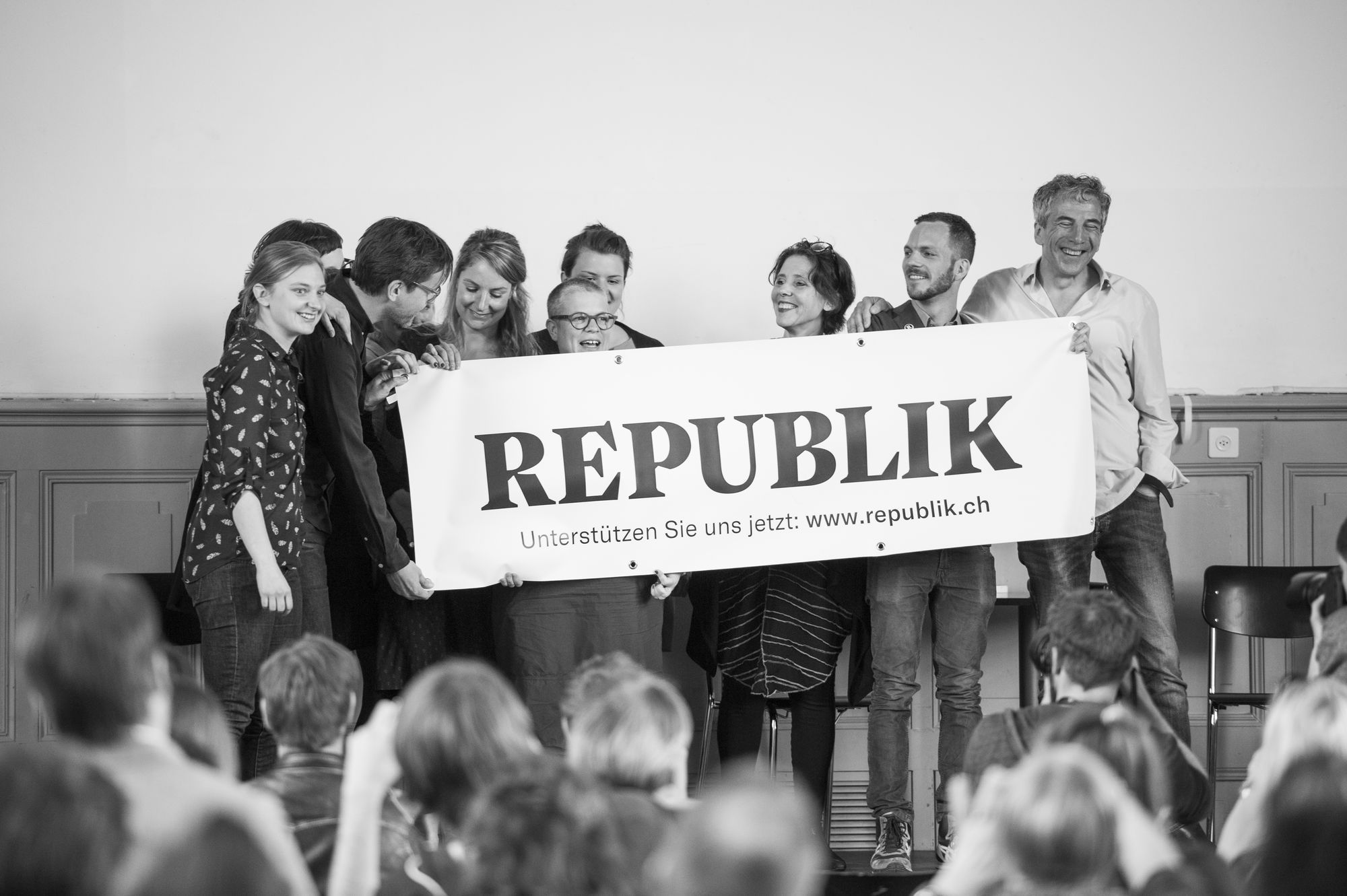
I gave a workshop at Republik Magazine in Zurich, introducing their investigative team to CLI-based agentic workflows for traditional journalist tasks.
Republik is one of Switzerland's most important independent newsrooms — the kind that gets sued by Palantir for their reporting. Their team works on complex investigations with large datasets and multilingual sources. Exactly where AI changes what's possible.
What I covered
The session demoed Claude Code as an example of CLI-based agentic workflows applied to everyday investigative tasks:
- Web scraping — searching, scraping, and mapping websites from the terminal
- OSINT tools — 150+ curated investigation tools via the OSINT skill and Navigator
- Translation — processing foreign-language documents directly in the workflow
- Data extraction — structured output from messy PDFs, XLSX, and CSV files
- Narrative — from raw research to scrollytelling deployed to the web
As a bonus, I demonstrated Signal — an autonomous investigation pipeline that receives a lead, scrapes the web, and spawns specialist agents (investigator + fact-checker) in a loop until findings are grounded in evidence. I used the Assam investigation (a collaboration with The New Humanitarian) as the live case.
The key message: every finding must be grounded in evidence. Scrape before you cite. Quote verbatim. Two independent sources minimum. An honest gap is infinitely more valuable than a plausible fiction. That's what separates investigative AI from chatbot summaries.
The thesis
The same AI technologies that consolidate power can be turned around to hold it accountable. Analyzing large datasets, monitoring social media at scale, crawling the open internet for patterns — all of that was impossible for a single reporter. Not anymore.
Thanks to David Bauer for having me.